Growth Management Act (GMA)
The Growth Management Act (GMA) is a Washington state law that requires most cities and counties to adopt a comprehensive plan to manage growth over a rolling 20-year period. The GMA was adopted in 1990 and the first GMA compliant comprehensive plans had to be adopted by 1994. The GMA establishes specific requirements that must be addressed by locally adopted comprehensive plans:
- Cities and counties must adopt housing and employment growth targets based on WA Office of Financial Management (OFM) projections.
- The Comprehensive Plan and development regulations must provide adequate development capacity to accommodate the housing and employment growth targets (RCW 36.70A.115).
- The Housing Element must identify adequate development capacity and include adequate provisions for cities’ housing needs (RCW 36.70A.070(2)).
- Transportation infrastructure, utilities, and capital facilities improvements must be planned so there is adequate capacity to serve the projected growth (RCW 36.70A.070).
- Comprehensive plans must be periodically reviewed and updated (RCW 36.70A.130).
Development Capacity
A core aspect of planning under the GMA is providing development capacity for planned housing and employment growth. Development capacity is a measure of how many housing units or commercial building square footage is possible given existing development, development regulations, market factors, environmental limitations, and land availability. Put another way, if a city has a housing growth target of 100 new housing units, the city must ensure that under the combination of factors listed above, at least 100 housing units could be permitted.
Adequate Provisions
The GMA requires cities to make adequate provisions for all their housing needs. Adequate provisions are a combination of incentives, mandatory provisions, and planned actions to achieve housing availability and reduce barriers to the production of affordable housing (RCW 36.70A.070(2)(d)).[DR1] The “adequate provisions” requirement in the GMA was adopted by House Bill 1220, discussed below.
Growth Management Hearings Board (GMHB)
Comprehensive plans adopted to comply with the GMA are subject to appeal. The Growth Management Hearings Board (GMHB) is a hearing body appointed by the Governor to hear appeals of comprehensive plans and determine whether they have complied with the GMA requirements.
The Mercer Island Comprehensive Plan was appealed to the GMHB in February 2025 (GMHB Case 25-3-0003). The GMHB issued a final decision and order (GMHB Order) regarding this appeal on August 1, 2025. The GMHB Order requires the City to make changes to its comprehensive plan by July 31, 2026, to comply with the GMA and address the following issues:
- Identify sufficient capacity of land to accommodate the City’s affordable housing needs for low, very low, and extremely low-income households, including permanent supportive housing.
- Adopt adequate provisions for all economic segments[DR2] relative to the area median income (AMI) including affordable housing, which includes emergency and permanent supportive housing.
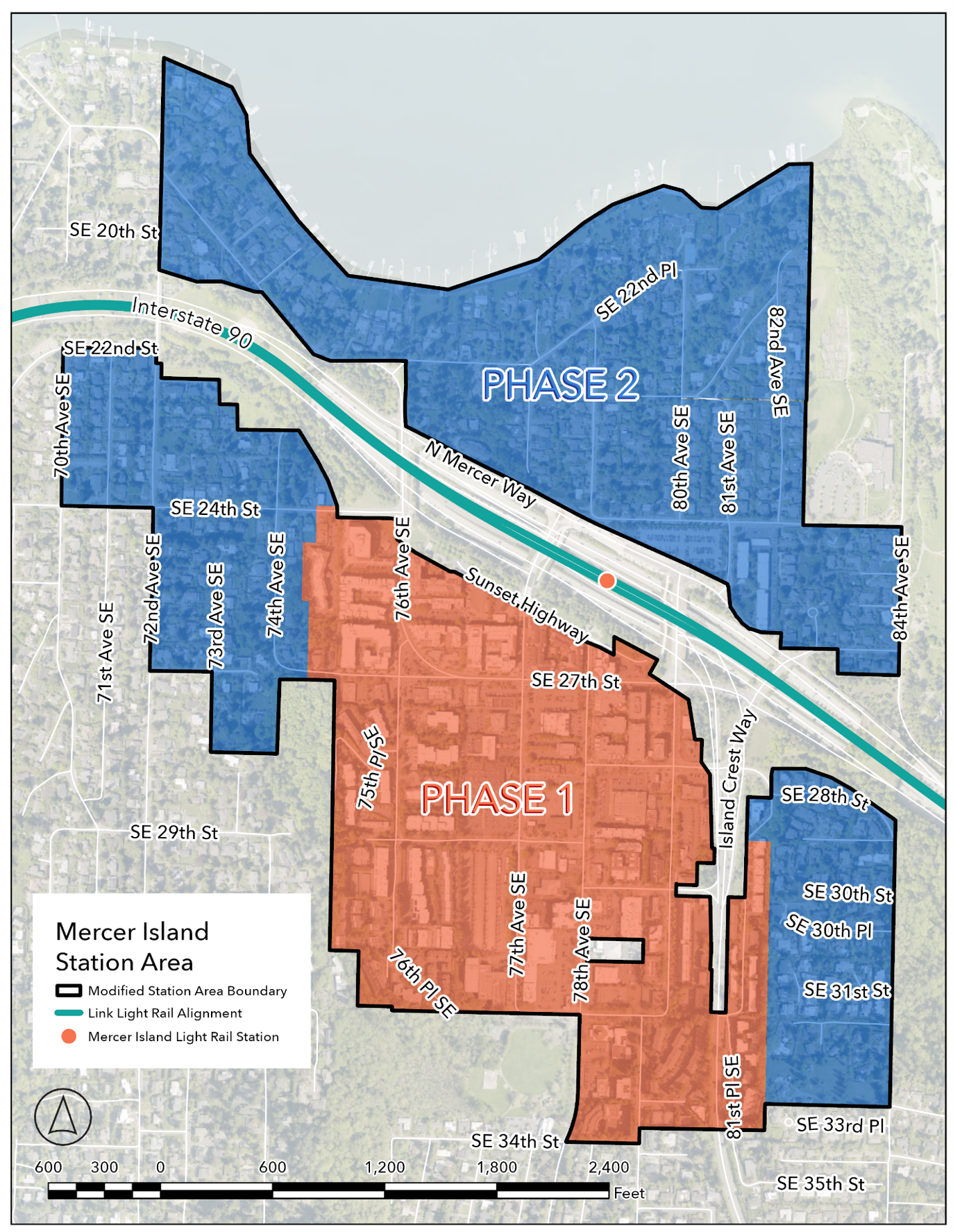
- Adopt a subarea plan for the area around the light rail station.
- Adopt anti-displacement measures concurrently with increasing housing development capacity.
If the GMHB finds a city or county is out of compliance with the GMA and that jurisdiction does not comply with an order, the board can recommend that the governor sanction that city or county. Sanctions can include withholding certain tax revenues and other financial penalties (RCW 36.70A.340).
Emergency and Permanent Supportive Housing
Emergency housing is temporary accommodation for households that are or at risk of becoming homeless. These facilities provide access to basic services but are not necessarily a long-term housing solution for households earning 30% of the area median income (AMI) and below. Emergency housing is defined in the GMA as follows:
"Emergency housing" means temporary indoor accommodations for individuals or families who are homeless or at imminent risk of becoming homeless that is intended to address the basic health, food, clothing, and personal hygiene needs of individuals or families. Emergency housing may or may not require occupants to enter into a lease or an occupancy agreement. (RCW 36.70A.030(15))
Permanent Supportive Housing (PSH) is a type of housing affordable to households earning 30% of the AMI and below that includes wrap around services such as behavioral or physical health services. As the name implies, PSH is intended to provide long-term housing solutions for households in the lowest-income bracket. It is defined in the Growth Management Act (GMA) as follows:
"Permanent supportive housing" is subsidized, leased housing with no limit on length of stay that prioritizes people who need comprehensive support services to retain tenancy and utilizes admissions practices designed to use lower barriers to entry than would be typical for other subsidized or unsubsidized rental housing, especially related to rental history, criminal history, and personal behaviors. Permanent supportive housing is paired with on-site or off-site voluntary services designed to support a person living with a complex and disabling behavioral health or physical health condition who was experiencing homelessness or was at imminent risk of homelessness prior to moving into housing to retain their housing and be a successful tenant in a housing arrangement, improve the resident's health status, and connect the resident of the housing with community-based health care, treatment, or employment services. Permanent supportive housing is subject to all of the rights and responsibilities defined in chapter 59.18 RCW. (RCW 36.70A.030(33))
Under the GMA, cities and counties are required to include housing targets for both emergency housing and PSH in the Housing Element of the Comprehensive Plan[JB3] (RCW 36.70A.070(2)(c)). Mercer Island’s current housing targets for PSH and emergency housing were set by the Washington Department of Commerce and King County as follows:
- PSH – 178 units
- Emergency Housing – 237 units
House Bill 1220
House Bill (HB) 1220 was adopted by the State Legislature in 2021. It amended the GMA to establish new planning requirements for housing. Under HB 1220 jurisdictions are required to do the following in regards to PSH and emergency housing:
- Identify sufficient land capacity for emergency housing, emergency shelters, and permanent supportive housing;
- Make adequate provisions for PSH and emergency housing;
- Document programs and actions needed to achieve housing availability, including gaps in local funding, barriers such as development regulations, and other limitations;
- Cities may not prohibit transitional housing or permanent supportive housing in any zones where residential dwelling units or hotels are allowed.
- Cities may not prohibit indoor emergency shelters and indoor emergency housing in any zones where hotels are allowed, except for cities that have adopted an ordinance authorizing indoor emergency shelters and indoor emergency housing in a majority of zones within a 1-mile proximity to transit.
- Reasonable occupancy, spacing, and intensity of use requirements may be imposed by ordinance on permanent supportive housing, transitional housing, indoor emergency housing, and indoor emergency shelters for public health and safety purposes, but such requirements on occupancy, spacing, and intensity of use may not prevent the siting of a sufficient number of permanent supportive housing, transitional housing, or indoor emergency housing or shelters necessary to accommodate the need for such housing and shelter as provided by Commerce.
More information on HB 1220 can be found in the Bill Report published by the legislature:
https://lawfilesext.leg.wa.gov/biennium/2021-22/Pdf/Bill%20Reports/House/1220-S2.E%20HBR%20FBR%2021.pdf?q=20260713095555
House Bill 2266
Adopted in March 2026, HB 2266 further amended the requirements for PSH and Emergency Housing; curtailing how cities can regulate this type of development. HB 2266 made the following changes:
- Cities must allow transitional housing and permanent supportive housing in all zones within an urban growth area in which residential dwelling units or hotels are allowed.
- Indoor emergency shelters and indoor emergency housing must be allowed in any zone in which hotels are allowed. Indoor emergency shelters and indoor emergency housing must be allowed in additional zones if necessary to meet projected needs identified in the comprehensive plan.
- A city may not require any standards, conditions, or requirements for PSH and emergency housing that are more restrictive than those required for other types of lodging or residential development in the zone.[DR4] This would include standards such as spacing requirements, conditional use permit requirements, and operational requirements.
- Cities can only apply the same development permit and environmental review processes to PSH and emergency housing that apply to lodging or residential development in the same zone, unless otherwise required by state law, such as shoreline regulations and building, energy, and electrical codes.
- If applying design review for PSH and emergency housing, only administrative design review may be required. "Administrative design review" for cities is defined as a development permit process in which an application is reviewed, approved, or denied by the code official based solely on objective design and development standards without a pre-decision public hearing.
- A city may require the sponsor or managing agency of an indoor emergency shelter or indoor emergency housing to certify in writing that it has met certain operational requirements, between the date the permit application was approved and the date the certificate of occupancy was issued,
- Upon receipt of a permit application for an indoor emergency shelter or indoor emergency housing with a proposed location within 500 feet of walking distance from a public or private school in operation prior to the permit application or from another indoor emergency shelter or other indoor emergency housing, a city may enter into negotiations with the sponsor to establish additional and reasonable requirements pertaining to health and safety protocols.
- If the parties are unable to come to an agreement within 180 days of the permit being submitted, the permit may be denied. This does not allow indoor emergency shelters or indoor emergency housing to be limited in a manner where the capacity for such facilities is insufficient to meet the projected needs in the comprehensive plan.
- These provisions do not apply to indoor emergency shelters or indoor emergency housing designated for individuals under the age of 18, families, or victims of domestic violence.
- A county or city that denies a permit must assist the sponsor to identify other suitable properties.
- Cities must incorporate the requirements of the act into their development regulations, zoning regulations, and other official controls within two years of the effective date of HB 2266 (June 11, 2026) or at the next comprehensive plan update, whichever is sooner.
- The City of Mercer Island is adopting these regulations as part of its compliance with the GMHB Order to provide adequate provision for all housing types. Adopting amendments to comply with HB 2266 now
- Removes barriers to PSH and emergency housing, and
- Ensures there is adequate development capacity for both housing types.
- The requirements of HB 2266 supersede, preempt, and invalidate any conflicting local requirements regardless of whether a county or city has incorporated the requirements of the act into its development regulations, zoning regulations, and other official controls.
More information on HB 2266 is available in the Bill Report published by the WA Legislature: https://lawfilesext.leg.wa.gov/biennium/2025-26/Pdf/Bill%20Reports/House/2266-S.E%20HBR%20FBR%2026.pdf?q=20260713101230
Additional Resources
Project Let’s Talk Page: https://letstalk.mercergov.org/comprehensive-plan-gma-compliance
March 10, 2026, Informational Webinar: https://www.mercerisland.gov/citycouncil/page/community-information-session-gmhb-order

 Source: King County Ordinance 19660 approved 8/22/2023.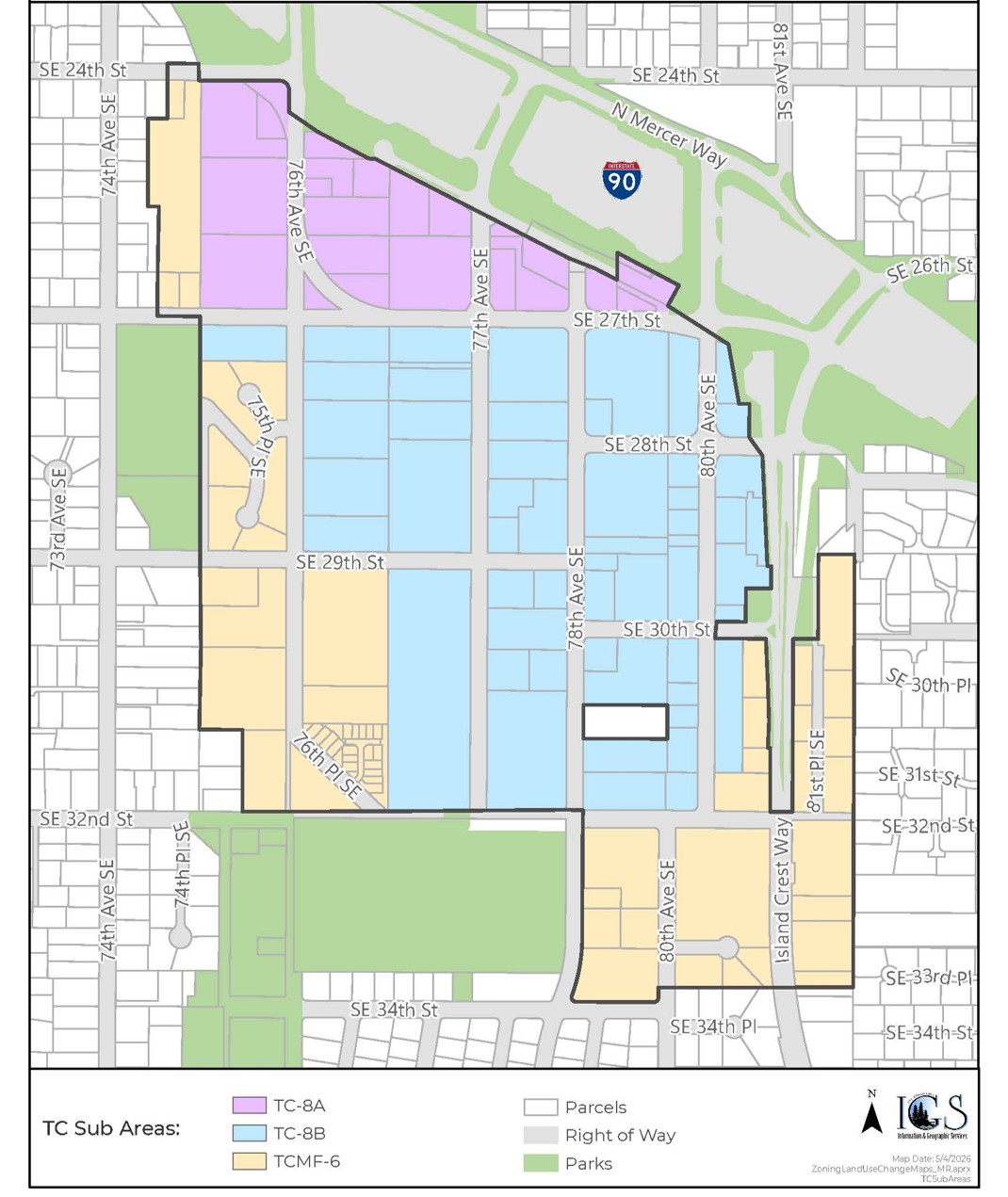
 2026-09-24 Compliance Order (147 KB) (pdf)
 January 16 City Council Meeting